
Do You Know Your Limes?
BTTB Restoration & Conservation Challenge
Welcome to Do You Know Your Limes?
Enter your name before starting. Your name will appear on your results certificate at the end.
1. Meet Your Limes
Open each product to study its chemistry, setting behaviour, strength, permeability, uses and conservation implications. You can reopen any product at any time.
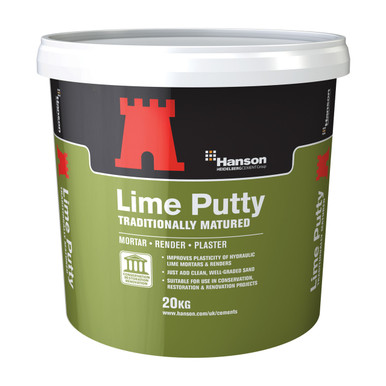
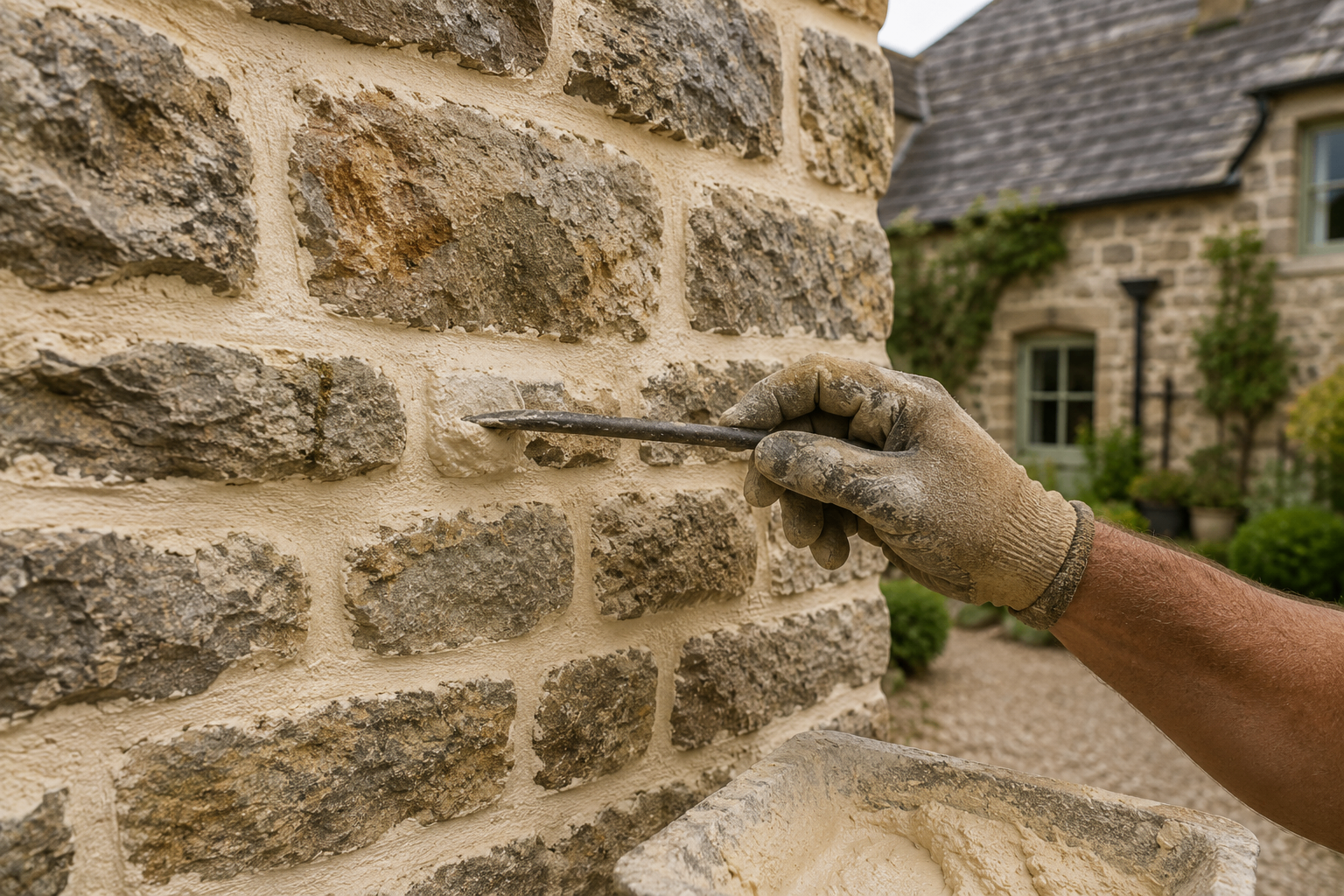
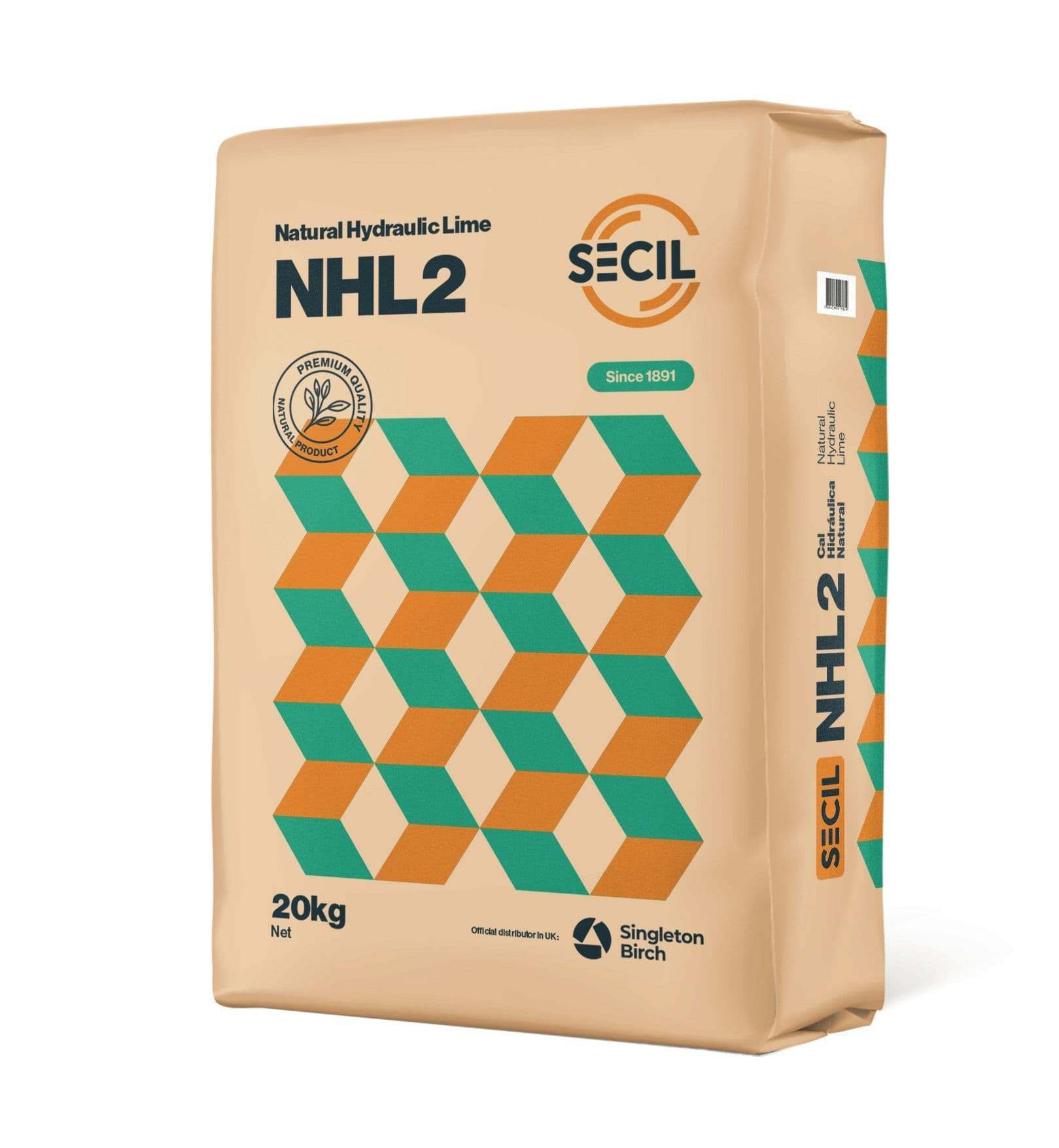


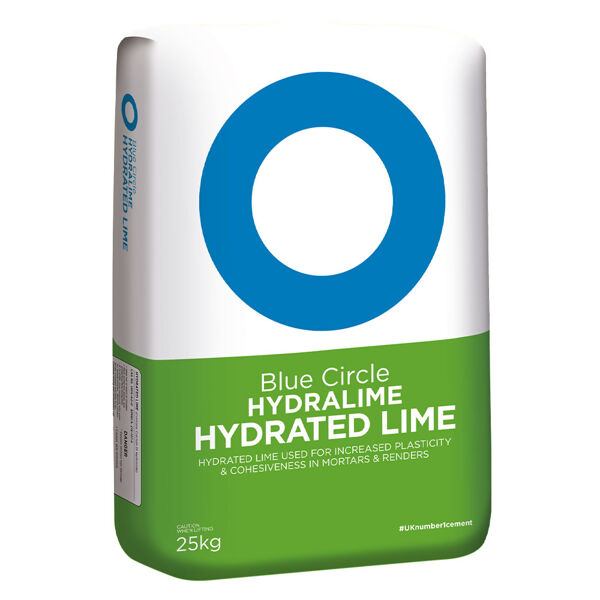
Non-Hydraulic Lime (Lime Putty)
Read this page carefully. The recall and site-judgement challenges later in the activity are based on this information.
What is it?
A traditional non-hydraulic lime binder produced by slaking quicklime with water and maturing it as a wet putty. Aggregate must be added before it becomes a mortar.How does it set?
It hardens mainly by carbonation. Calcium hydroxide reacts with carbon dioxide from the air and gradually forms calcium carbonate again.Strength, moisture & permeability
Mortars based on it can be relatively soft, flexible and highly permeable. Their open pore structure can encourage moisture to evaporate through the joint rather than being trapped in adjacent porous masonry.Where might it be appropriate?
Compatible soft historic brick or stone, sheltered elevations, internal work and conservation repairs where high early strength or severe exposure resistance is not required.Conservation principle
A compatible mortar may be deliberately more sacrificial than the masonry. Weathering and moisture movement should preferentially affect a replaceable joint rather than irreplaceable historic stone or brick.⚠ Watch out
Slow carbonation and low early strength mean it is not automatically suitable for persistently wet, very exposed or demanding locations. Protection and curing matter.Lime Putty Mortar
Read this page carefully. The recall and site-judgement challenges later in the activity are based on this information.
What is it?
A finished mortar in which matured non-hydraulic lime putty has already been combined with a suitable sand or aggregate. The binder and the mortar are not the same product.How does it set?
Its lime binder hardens predominantly by carbonation rather than a hydraulic reaction with water. Correct joint preparation, moisture control and protection help the process.Aggregate matters
Aggregate is not just filler. Grading, particle shape, colour and proportions influence workability, pore structure, texture, appearance and performance. Matching historic mortar is therefore more than choosing a lime name.Storage & supply
Because water does not trigger a hydraulic set, properly protected putty mortar can remain workable in wet storage. A premixed product gives more consistent proportions and colour between batches.Conservation principle
In suitable masonry it can form a relatively soft, permeable and sacrificial pointing joint. A joint that eventually needs repointing may have done its job if the historic masonry has been protected.⚠ Watch out
“Premixed” is not a strength class. A product still has to be judged by its binder, aggregate, intended use and compatibility with the building.NHL 2 — Natural Hydraulic Lime
Read this page carefully. The recall and site-judgement challenges later in the activity are based on this information.
What is it?
A Natural Hydraulic Lime in the lowest nominal strength class of the three NHL categories studied here. Its raw limestone naturally contains reactive clay/mineral constituents.How does it set?
After water is added, reactive calcium silicates and aluminates form hydrates and give an initial hydraulic set. Carbonation can continue over the longer term. It therefore does not rely solely on atmospheric CO₂ for its early set.Strength & permeability
It is the lower nominal NHL strength class, but the number is a classification rather than a complete prediction of mortar behaviour. Product, aggregate, mix proportions and curing all affect performance.Where might it be considered?
Conservation work where some hydraulic set is useful but compatibility calls for a relatively modest hydraulic strength. The masonry, original mortar, condition and exposure still govern the decision.Think like a craftsperson
Do not specify it simply because it is the “weakest NHL”. Ask what the masonry needs: permeability, movement accommodation, exposure resistance and compatible strength.⚠ Watch out
Two NHL products carrying the same class can behave differently. NHL 2 should not be treated as a guaranteed recreation of every traditional weakly hydraulic historic lime.NHL 3.5 — Natural Hydraulic Lime
Read this page carefully. The recall and site-judgement challenges later in the activity are based on this information.
What is it?
The intermediate nominal strength class of Natural Hydraulic Lime. It contains naturally occurring reactive constituents that allow hydraulic hardening after mixing with water.How does it set?
Hydration reactions contribute to its initial set and strength; carbonation continues as carbon dioxide reaches available lime. This gives a different setting mechanism from a purely non-hydraulic putty mortar.Strength & exposure
It generally offers greater hydraulicity and earlier strength than softer lime options, with correspondingly different permeability and stiffness. Actual performance cannot be read from the class number alone.Where might it be considered?
Sound compatible masonry where exposure and performance requirements justify a more pronounced hydraulic set. Chimneys, exposed elevations or other demanding areas may prompt consideration — but only after assessing the masonry.Specification judgement
The “middle” class is not automatically the sensible middle choice. A conservation specification should respond to the building, not to a convenient number on a bag.⚠ Watch out
Using NHL 3.5 as a default “general conservation mortar” can result in a mortar more hydraulic, stiff or impermeable than some historic masonry requires.NHL 5 — Natural Hydraulic Lime
Read this page carefully. The recall and site-judgement challenges later in the activity are based on this information.
What is it?
The highest nominal strength class of the three Natural Hydraulic Limes studied in this activity. It develops a pronounced hydraulic set after mixing with water.How does it set?
Hydraulic compounds react with water and form hydrates, providing significant early hydraulic strength. Carbonation can also contribute over time.Strength, stiffness & moisture
Greater strength is not automatically beneficial. If a repair joint is significantly harder, stiffer or less permeable than adjacent weak masonry, moisture and stress can be displaced into the historic stone or brick.Where might it be considered?
Demanding exposed work with suitably tough, durable masonry in good condition, where the required performance has been established by the specification.Sacrificial principle
A pointing joint should not win a contest against the masonry. Losing an easily replaced mortar joint is often preferable to losing the arris or face of historic stone.⚠ Watch out
“External”, “old” or “exposed” are not enough reasons to select the strongest NHL. Compatibility and moisture behaviour matter as much as strength.Hydrated Lime (Hydralime)
Read this page carefully. The recall and site-judgement challenges later in the activity are based on this information.
What is it?
A dry hydrated lime, principally calcium hydroxide, produced by adding a controlled amount of water to quicklime during slaking. Hydrated and hydraulic describe different things.What does it do in mortar?
In conventional cement-lime-sand mortar it is commonly used to improve fresh properties such as plasticity, cohesion and water retention, helping the mortar feel workable on the trowel.Setting behaviour
The word “hydrated” refers to manufacture/slaking. It does not place the product in the NHL family and does not mean it develops the same hydraulic set as NHL 2, 3.5 or 5.Where might you meet it?
Modern bricklaying mortars containing Portland cement, sand and hydrated lime. Its role there is very different from selecting an NHL binder for a conservation pointing mortar.Technical distinction
Quicklime + water produces hydrated lime (calcium hydroxide). Hydraulic lime, by contrast, contains compounds capable of setting through reaction with water.⚠ Watch out
Do not assume a bag labelled hydrated lime is an NHL or substitute it directly into an NHL conservation specification. Similar words do not mean the same material behaviour.2. Mystery Lime 🔎
Identify the product as early as possible. Clue 1 = 3 points, Clue 2 = 2, Clue 3 = 1.
3. Know Your Strength
Order the three NHL classifications from lower to higher 28-day strength classification.
4. Where Would You Use It?
Apply your knowledge to cottages, churches, exposed masonry and modern brickwork.
5. Lime Inspector 🕵️
Judge somebody else's recommendation: AGREE or CHALLENGE?
Completion Certificate
This certifies that
has completed the learning challenge
Do You Know Your Limes?
BTTB Restoration & Conservation Challenge
Key learning: stronger does not automatically mean better. The right mortar must be compatible with the masonry, its condition, location and exposure.